
Talks

Public Lectures & Continuing Education

Dr. Vető offers a range of public lectures, series, and continuing-education engagements for synagogues, community scholar programs, JCCs, Hillels, universities, and adult learning groups. Topics range from her own biographical story to introductory Midrash and Talmud to substantive engagement with contemporary campus climate and the Land of Israel.

מאימתי — “from when?” — the opening word of the first mishnah of Tractate Berakhot, set inside an ornate Renaissance-style engraved cartouche of leaves, vines, and grape clusters.

Signature Talks

Each offered as a standalone lecture, a mini-series, or a full 10-session course, in-person or online.

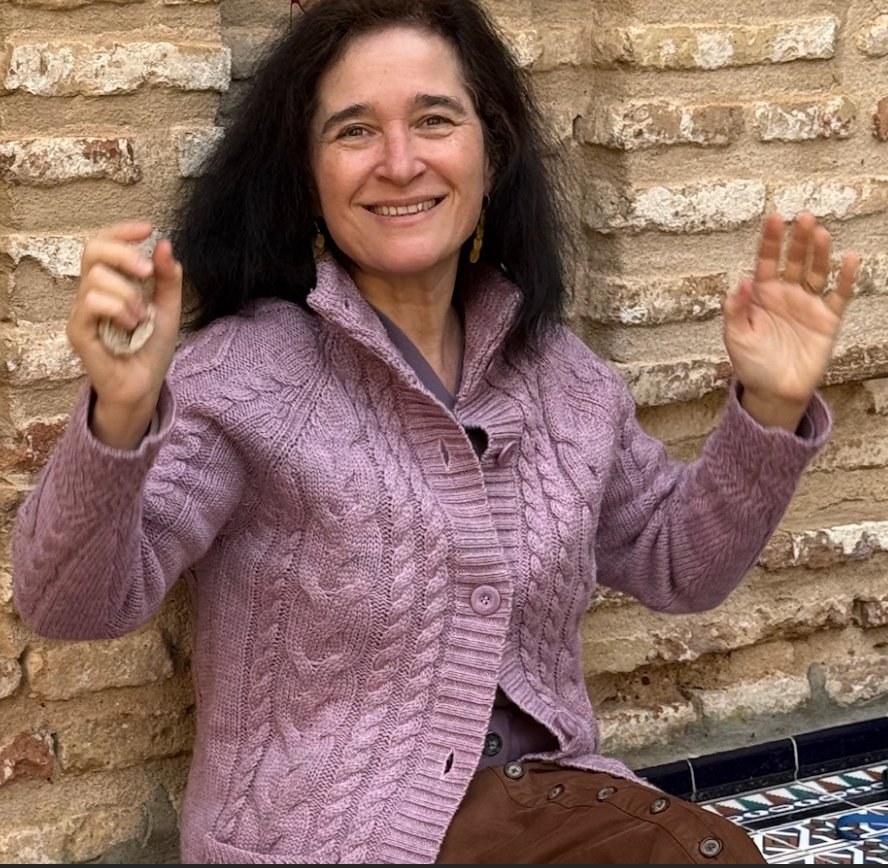
Color portrait of Ági Vető — a woman with shoulder-length curling dark hair and gold drop earrings, smiling warmly at the camera with both hands raised palms-out at chest height in a welcoming gesture, wearing a heathered dusty-pink cable-knit cardigan over a mauve shirt, seated against a weathered exposed-brick wall with a strip of tilework visible at the lower edge.

From a Catholic Girlhood in Hungary to Orthodox Rabbinic Ordination

A Conversion Story

Ági grew up in Budapest, the daughter of a Catholic mother and a father who converted from Judaism to Catholicism after the Shoah. Her burgeoning awareness of her father’s Jewish heritage moved her to engage in the “unofficial” study of Hebrew and Aramaic during Hungary’s period of “soft socialism.” This was the beginning of a pilgrimage of the heart, soul, and intellect — to Bible, history, and eventually Talmud study, with multiple MAs and a doctorate in between, and finally rabbinic ordination as a poseket. Her experience in Central-East Europe reveals an extraordinarily diverse spectrum of what it might mean to be Jewish.
Is It True What I’ve Heard?

Jews and Jewish Studies at Liberal Arts Colleges

There’s a great deal of information floating around the Internet regarding what goes on at liberal-arts colleges today in terms of Jews, Jewish community, education, and politics. Dr. Vető, Lecturer in Jewish Studies at Vassar, who has taken the lead in developing the Jewish Studies curriculum — including courses on anti-Semitism and the Land of Israel — brings the news straight from campus. Free of political bias, rumor, or innuendo, the talk is designed to help parents, grandparents, and prospective students judge for themselves, and to prepare for the campus climate they will encounter.

YOU Can Learn Midrash

A Beginner’s Guide

The ancient rabbis had a brilliant and beautiful way of looking at biblical texts. For them, words mattered: they assumed that each word was significant, that each idea was connected with a spectrum of others, and that there was a backstory behind every narrative the Torah related. Rabbanit Vető brings the unique perspective of being both a rabbi trained in orthodox methodology and a college professor. Her approach emphasizes history, text, and culture — and, most importantly, puts the learner in the driver’s seat.

YOU Can Learn Talmud

A Beginner’s Guide

The Talmud is the repository of Jewish wisdom and life-lore: a portable study-house where voices across generations and geographies are juxtaposed in ever-stimulating conversation. But how to enter into it? Rabbanit Vető brings the rigor and precision of the traditional yeshivah into dialogue with literary, psychological, and historical modes of thinking. As Rabbi Hillel put it: if not now, when? If not with a gracious, patient, and welcoming instructor, then with whom?

YOU Can Learn Hebrew

A Beginner’s Guide · Individual or Small-Group Lessons
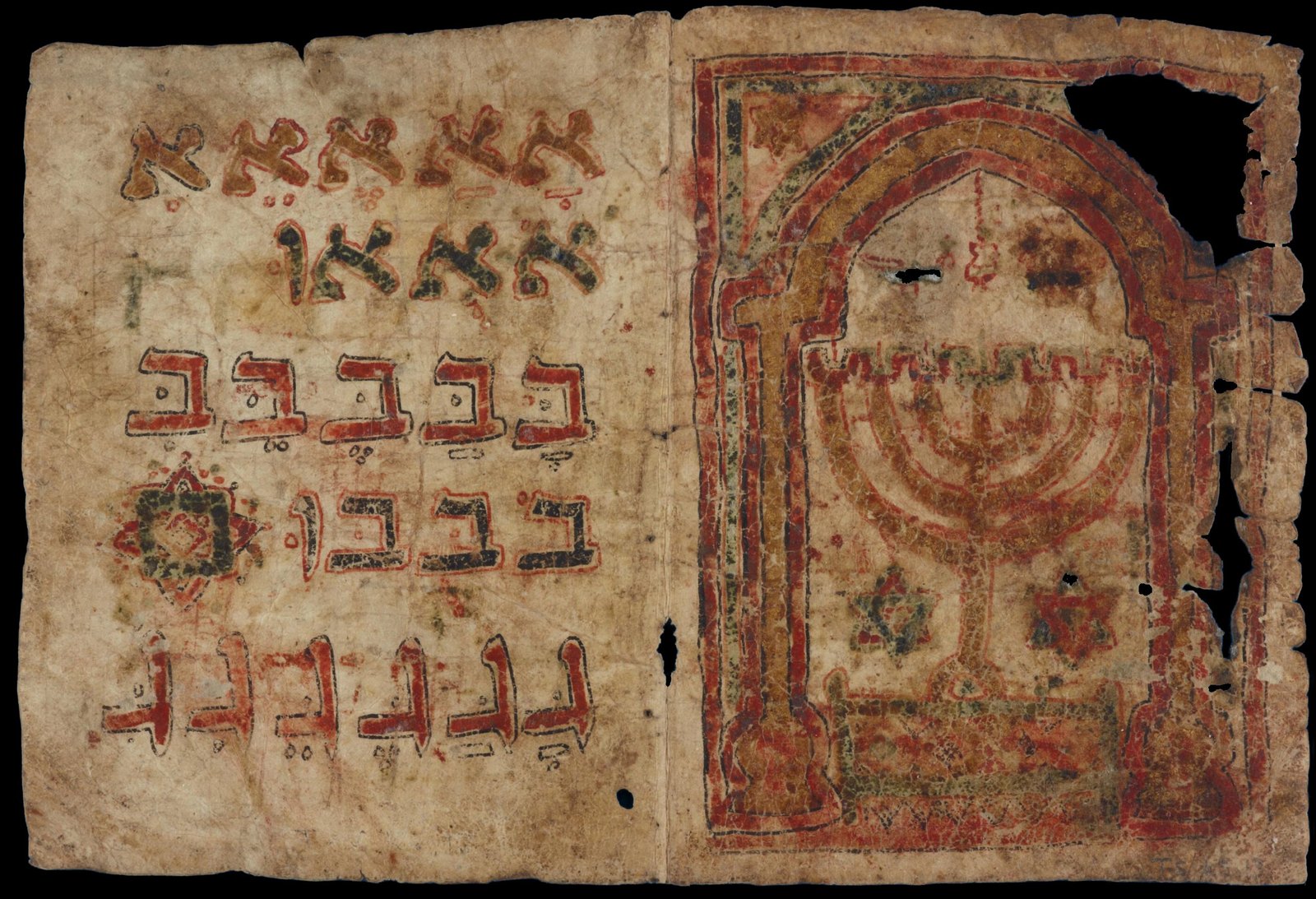
Two-page spread of an early medieval Hebrew alphabet primer on cream parchment, edges torn and worn black: on the left, four rows of practiced Hebrew letters in red and dark ink — alephs across the top, then bets, gimels, and dalets, each row written four or five times with vowel points; on the right, a stylized arched mihrab in red, ochre and indigo enclosing a seven-branched menorah with stylized Stars of David in pink and green at its base, the whole composition framed by a tall pointed arch echoing a synagogue bimah.
Early medieval Hebrew alphabet primer from the Cairo Geniza, ink on parchment.Cambridge University Library, T-S K5.13.

Hebrew is the language of the Bible, the prayer-book, the Mishnah and Talmud, and the modern Jewish state — and a language that any patient learner can begin to read at any age. Rabbanit Vető offers individual and small-group Hebrew instruction at every level, from absolute beginners learning the alphabet to adults preparing for an adult bar or bat mitzvah, from biblical and liturgical reading to conversational modern Hebrew. As with the other “YOU Can Learn” offerings, the approach is rigorous, gracious, and built around the learner’s own pace and goals.

Recent Series

2022

92nd Street Y · New York

Four Lectures on the Land of Israel
  1. How Did It All Begin? — Who were the first Israelites when they emerged as a cohesive ethnic group? The patriarchal narratives and the Exodus read alongside outsider accounts from Egypt and Transjordan. November 18
  2. The God of the Land of Israel — The ancient layers of the Hebrew Bible that outline an early, polytheistic religion where a storm god called Yahweh gradually erases all the other members of the pantheon and becomes the monotheistic deity of Judaism. December 2
  3. In Exile — How the rabbis, who grieved over the loss of the land, nonetheless articulated a prohibition on collective return to it, and how that prohibition was eventually challenged by the Vilna Gaon. December 9
  4. Return and its Discontents — The programmatic response of orthodox rabbis to Zionism between the late 19th and mid-20th centuries: Hibbat Zion, Satmar, Chabad, Neturei Karta. December 16

Invited Talks

2018

Oxford Summer Institute on Modern & Contemporary Judaism

Metaphors and Masculinity: A Rabbinic View
Oxford, United Kingdom

Inquiries

For speaking inquiries, please write to agveto@vassar.edu or call (845) 418-7186. Dr. Vető offers a spectrum of topics that slot into the broader frameworks of Midrash and Talmud — from engaging, participatory single classes to mini-series (three lectures) or full series (ten lectures). Venues in recent years have included the 92nd Street Y, Yeshivat Maharat, the Bayit in Riverdale, and synagogue and community scholar programs across the Hudson Valley and beyond.