Writing

Articles & Essays

Published, forthcoming, and in progress — centered on the predicament of agunot and the halakhic resources available to free them, and on the emerging halakhic questions of the modern sovereign Jewish polity. Earlier work, drawn from her dissertation, reads the rabbinic construction of gender through the laws of ritual impurity.

2024

Reactivating Mi’un to Free Agunot Within the Framework of Halakhah

Keren: A Journal of Orthodox Jewish Thought · Yeshivat Maharat, 2024

A close reading of m. Yevamot 13 and its talmudic elaboration, tracing the tannaitic institution of mi’un — the ritual by which a minor-orphan wife could retroactively annul a rabbinic-level marriage — as a rare locus of autonomous female agency in classical Jewish divorce law. The article reads the gradual constriction of mi’un across the gemara and later codes, argues that the trajectory was neither inevitable nor permanent, and proposes specific halakhic mechanisms by which mi’un might be reactivated within a contemporary orthodox framework to help free women trapped in the agunah predicament.
In Progress

Silent Revolutions and the Heter Iska Model

Article derived from the book project in progress

How Jewish law has previously adapted to societal changes by implementing legal mechanisms that addressed the community’s evolving needs without formally overturning biblical prohibitions — the heter iska as paradigm — and what analogous mechanisms the tradition might yet generate for the contemporary situation of agunot and the status of women within marriage.

In Progress

The Halakhot of War and Peace in the Modern Sovereign State

Research paper in development

The rabbinic sources on milḥemet reshut and milḥemet mitzvah — the optional and obligatory war — read against modern debates on the ethics of Jewish sovereignty, the treatment of combatants and non-combatants, and the halakhic status of sovereignty itself.

In Progress

Synagogue and State: Religious-Secular Tensions in Modern Israeli Law

Research paper in development

On the live tensions between the authority of halakhah and the authority of the sovereign state in modern Israel — religious-secular conflicts over marriage and divorce, the rabbinic courts, conversion, Shabbat in the public square, and the gendered consequences of each.

In Preparation

The Metaphorization of the Female Body in Rabbinic Literature

Journal article · nearing submission · distilled from the Fluid Masculinity project

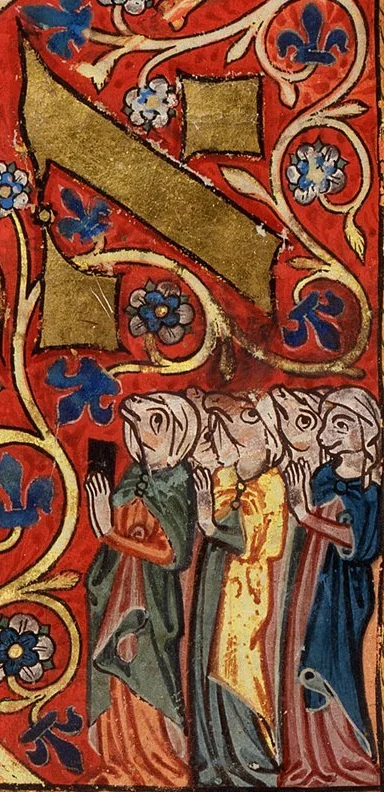
Detail of a medieval illuminated initial: against a vermilion ground patterned with blue acanthus and white roses, a great gold sloping initial fills the upper field, and below it stand four women in long robes — one in green, one in golden-yellow, one in dusky pink, one in dark blue — gesturing in conversation with hands raised, half-figure visible at right.
Women in conversation beneath an illuminated initial. Detail from a medieval Latin manuscript.

Examines how the rabbis metaphorized the female body in legal-literary discourse — arguing, in dialogue with and in dispute of Charlotte Fonrobert’s Menstrual Purity, that the triple move of metaphorization, objectification, and exclusion is not a move the rabbis apply specifically to women, but one they apply to all bodies subject to their hegemonic legislative gaze.

2019

Written on the Body: Salome, Sotah, and Gynecology as Truth-Testing

Essay · comparative reading of the rabbinic Sotah ritual and the Protoevangelium of James

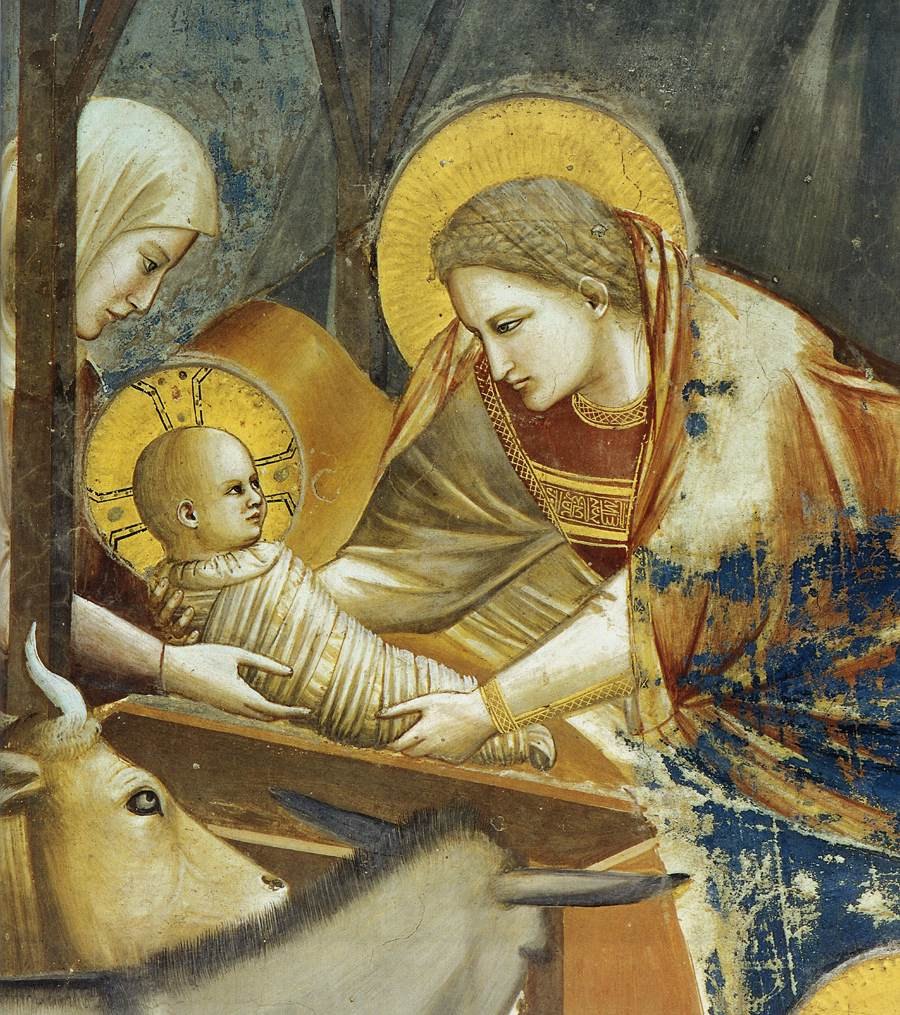
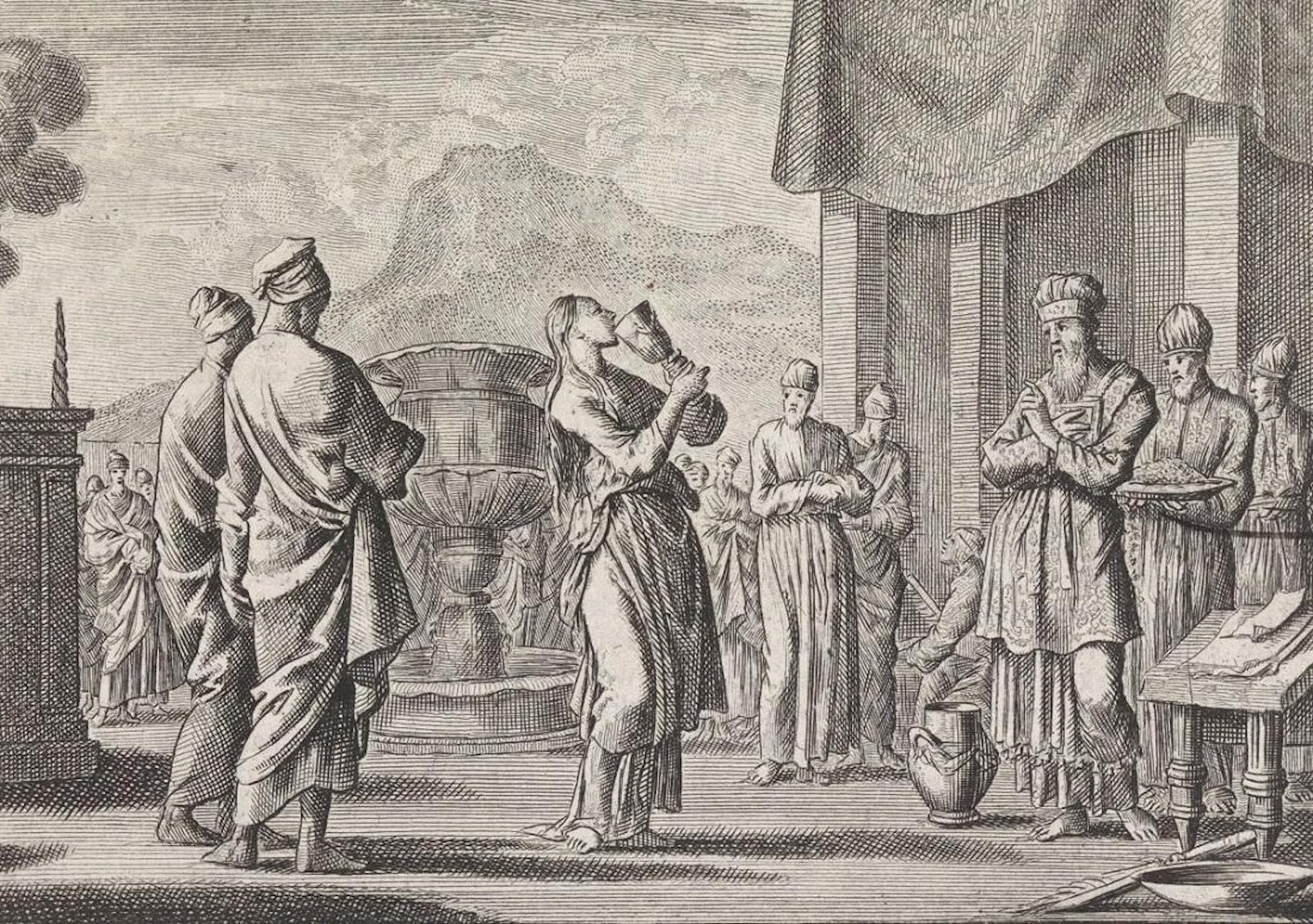
A reading of the female body as a site of truth-telling across rabbinic and early Christian traditions: the rabbinic Sotah ordeal as described in Numbers 5 and elaborated in the Mishnah, alongside two closely related moments in the Protoevangelium of James — the trial of the bitter waters administered to Mary and Joseph, and the gynecological verification performed by the midwife Salome on the newly-delivered Mary. The essay reads the later text’s adaptation as an “anti-bitter-waters” procedure, one that inverts the halakhic ritual’s goal of confirming marital sexual rights into a demonstration of marital sexual abstinence as meritorious.

2015

“Sacred and Profane”: Naked Ladies in the Haggadah?

Focus essay · the medieval Haggadah and the rabbinic construction of female sexuality

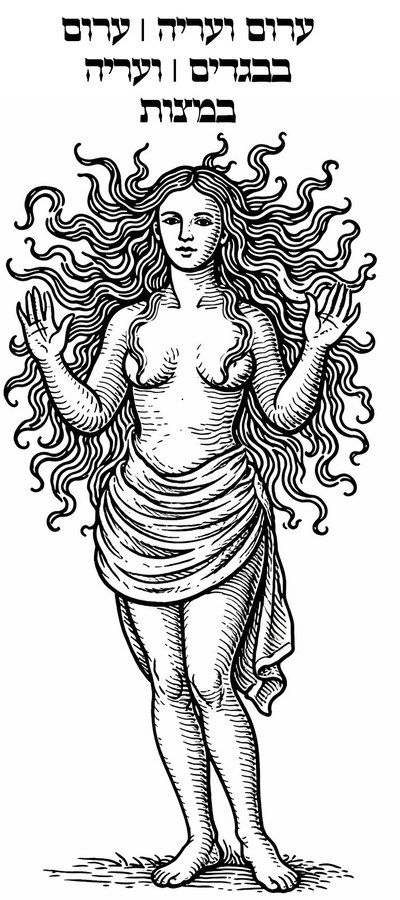
Black-and-white woodcut-style line drawing of a young woman standing barefoot, naked from the waist up, hair flying outward in long curling tendrils to either side of her head, hands raised palms out at shoulder height, lower body wrapped in a draped towel; above her in square Hebrew type are the words ‘arom v’eryah, arom b’vegadim, v’eryah b’mitzvot’.
A chapter Skies of Parchment, Seas of Ink: Jewish Manuscript Illumination (ed. Epstein) Princeton University Press, 2015

A focus essay on the surprising appearance of an explicitly sexual Ezekiel verse — and a fully naked woman emerging from the mikveh — within the medieval haggadah’s account of Israelite fruitfulness in Egypt. Reading a fourteenth-century Italian Ashkenazi haggadah against the rabbinic commentaries that systematically displace female sexuality onto male-coded ritual blood (circumcision, the paschal sacrifice), the essay argues that the illuminator and patrons proposed a different solution: not the erasure of female sexuality, but its “taming” into a marital and ritual frame in which it can be shown as virtuous rather than taboo.

Read the essay PDF · contributed chapter, Skies of Parchment, Seas of Ink, Princeton University Press, 2015